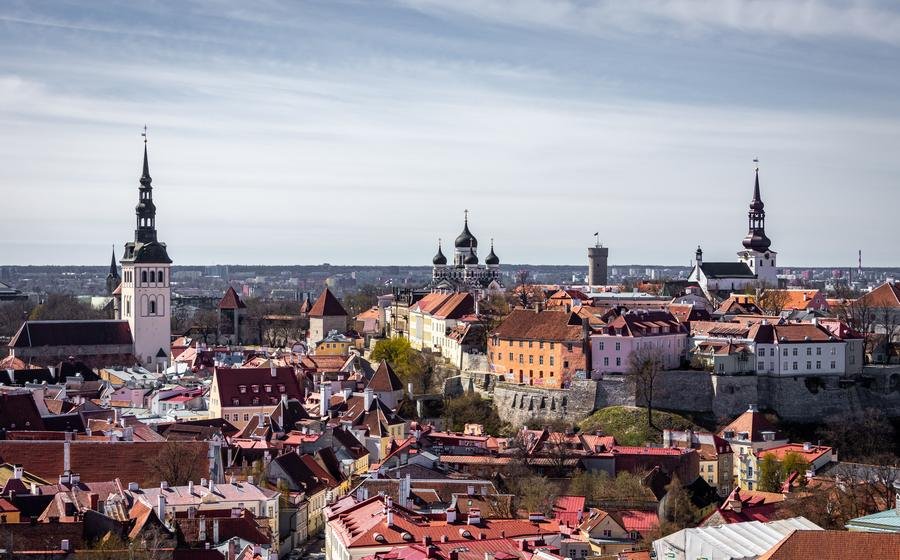
Serbia is not an EU member but a candidate country – and precisely for that reason uses its own instruments: a profit tax of 15% with neither surcharges nor a minimum tax, an IP box that exempts 80% of income from software and patents, and 15 free zones. Company formation in Serbia offers a well-developed environment, particularly in IT; Belgrade and Novi Sad are regarded as the region’s most important development hubs.
15% without surcharges
Serbian companies pay 15% profit tax on their worldwide profit. There are no municipal surcharges or minimum tax, and the rate applies regardless of company size. The tax is paid in monthly advance instalments; for newly formed companies, the first advance return is due within 15 days of registration.
Serbia levies 20% withholding tax on dividends to shareholders abroad, and 25% to recipients in low-tax jurisdictions. Its network of more than 60 double tax treaties, including with Germany, Austria and Switzerland, usually reduces the rate considerably. Taxes are administered by the Serbian Tax Administration.
IP box: software at effectively 3%
For technology-oriented companies, the IP box is the strongest argument. Income from intellectual property developed and registered in Serbia – in particular software and patents – is 80% excluded from the tax base. Profit tax on this income is therefore effectively only 3%. Anyone planning company formation in Serbia with in-house software development should plan the IP box from the outset.
The IP box is complemented by incentives for research and development. For large investments of €8.5 million or more with at least 100 new jobs, the Investment Law also provides for a ten-year exemption from profit tax.
Zones for production and export
In Serbia’s 15 free zones, supplies of goods and services within the zone are exempt from VAT, profits can be transferred freely and land is leased on favourable terms. The zones are aimed mainly at production, logistics and export.
Outside the zones, VAT is 20%, reduced 10%. Registration is mandatory from turnover of RSD 8 million within twelve months, roughly €68,000.
Capital and legal form
The usual legal form is the d.o.o., the Serbian limited liability company; it requires a symbolic share capital of RSD 100. Foreigners who want to apply for a residence permit through the company should, in practice, pay in at least the equivalent of €250. The joint-stock company a.d. requires RSD 3 million.
Salaries are subject to a flat 10% income tax; since 2026, a monthly allowance of RSD 34,221 is tax-free. Shareholders resident in Serbia pay a final 15% on dividends.
Formation via the APR
Company formation in Serbia runs via a manageable procedure with the Business Registers Agency:
- Founding act: articles of association or founding decision with certified signatures.
- Registration: with the Business Registers Agency (APR), which also issues the tax and registration numbers.
- Bank account and capital: opening the business account and paying in the share capital.
- First tax return: advance return for profit tax within 15 days.
- VAT: registration from RSD 8 million of turnover or voluntarily.
Registration with the APR is usually completed within a few working days.
Accounting and obligations
The key obligations for bookkeeping, accounts, audit and VAT at a glance – so you know from the start what running your company involves.
| Obligation | Rule |
|---|---|
| Tax return | Monthly advance payments; first return within 15 days of registration |
| VAT: registration | From RSD 8 million (approx. €68,000) in twelve months; rate 20% |
As of 2026. Bookkeeping and filings are usually handled by specialised accountants in the target country.
Is Serbia right for you?
Whether Serbia is right for you depends mainly on whether the EU single market matters – and whether you will create your own intellectual property:
Suitable for
- Software companies with their own intellectual property
- IT teams building developers in Belgrade or Novi Sad
- Manufacturers in a free zone
- Founders for whom symbolic share capital suffices
Less suitable for
- Companies needing the EU single market without a customs border
- Traders with end customers in the EU
- Groups relying on the EU Parent-Subsidiary Directive
- Ventures that must report in euros
For similar advantages at even lower rates, look at North Macedonia with 10%; within the EU, Bulgaria and Hungary offer comparably low taxes. The overview of all locations and the tax comparison give the full picture; the right structure emerges in the initial call.