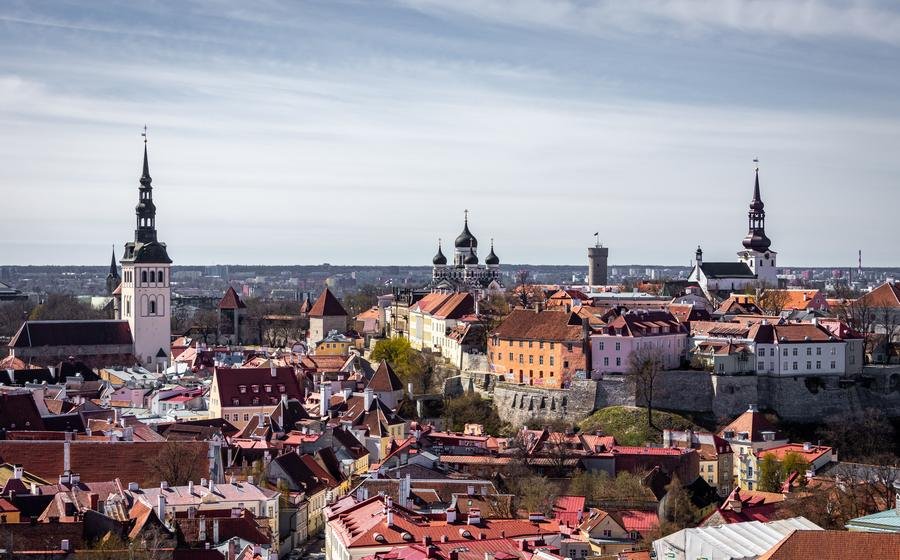
Malta is small but leads the way in several industries: the island runs the largest ship register in Europe, established itself early as a hub for online gaming and combines membership of the EU and the eurozone with English as an official language. Behind the headline rate of 35% lies a refund system: anyone choosing Malta for company formation can effectively reduce the burden on distributed trading profits to 5%.
Effectively 5% through refunds
A Maltese company first pays 35% corporate tax. When it distributes its profit, shareholders receive most of that tax back on application: for profits from ordinary trading activities, six sevenths. Through this refund, the burden ends up at effectively 5%; refunds are claimed after each distribution. With €100,000 of profit, the company pays €35,000 in tax, the shareholder receives €30,000 back – leaving €5,000.
Malta levies no withholding tax on dividends, interest and royalties paid to shareholders abroad, and income from subsidiaries can remain tax-free. The framework is published by the Malta Tax and Customs Administration.
Since 2025 there has also been an alternative to the refund system: companies can choose to pay 15% tax directly, without the detour of payment and refund. This option is designed for international groups with more than €750 million in revenue that have to pay 15% anyway under the global minimum tax. For entrepreneurs and mid-sized companies, the refund system with effectively 5% remains clearly the better choice.
Shipping and gaming
Malta’s specialities are above all the shipping and the gaming industries. The Maltese flag is the largest in Europe by registered tonnage and among the six largest worldwide. Shipping companies benefit from a tonnage tax: instead of profit, the size of the vessel is taxed, and income from ship operations remains exempt from income tax under the statutory conditions. This makes Malta attractive for shipowners, ship managers and owners of large yachts.
Malta positioned itself just as early as a location for online gaming: back in 2004, the island created a comprehensive legal framework for online gaming operators. Licences are issued by the Malta Gaming Authority, one of the best-known regulators in the industry worldwide.
Malta as a place to live
Malta is not just a location for the company but also for your own life. Anyone who moves to Malta without establishing their domicile there is taxed as a non-dom: foreign income is only subject to Maltese tax if it is remitted to Malta. Anyone with at least €35,000 of foreign income per year pays a minimum tax of €5,000.
Combining company formation in Malta with a move to the island pays off twice. Add to this a mild Mediterranean climate, English as an official language, short distances and an international community of entrepreneurs. On request, we also assist with finding a home and with personal registration in Malta – so that company and relocation can be aligned.
Residence programmes for newcomers
Malta taxes persons who are resident but not domiciled in the country on a remittance basis: foreign income is only taxable to the extent it is remitted to Malta, and foreign capital gains remain tax-free even then. Three residence programmes build on this for newcomers, administered by the Residency Malta Agency and the tax authority:
| Programme | For whom | Taxation |
|---|---|---|
| Residence Programme | citizens of the EU, EEA and Switzerland | 15% on remitted foreign income, at least €15,000 a year |
| Global Residence Programme | nationals of other countries | 15% on remitted foreign income, at least €15,000 a year |
| Nomad Residence Permit | remote workers from third countries with at least €42,000 income | 10% on the work performed in Malta |
For the Global Residence Programme, a property must be bought for at least €275,000 (€220,000 on Gozo and in the south of Malta) or rented for at least €9,600 a year. Maltese income is taxed at 35% under the programmes. The minimum tax of €15,000 also covers the income of family members.
Holding: participation exemption and NID
For a holding, Malta offers a participation exemption alongside the refund system: dividends and capital gains from qualifying participations can be received 100% tax-free. Since 2018, there has also been a notional interest deduction (NID), allowing companies to deduct a notional return on their equity – such as retained earnings – from taxable profit. Equity financing is thus brought closer to debt financing for tax purposes.
The formation process
Anyone planning to set up a company in Malta follows a clear process:
- Check and reserve the company name with the Malta Business Registry.
- Draft the Memorandum and Articles of Association: they govern shares, bodies and purpose of the company.
- Pay in the share capital: at least €1,165, of which 20% on formation.
- Appoint director, company secretary and registered office: the company needs an address in Malta.
- Registration and tax registration: after registration, the tax number and, if required, VAT registration follow.
The Malta Limited comes into existence on registration; with complete documents and identity checks, it is usually fully operational within a few weeks.
Accounting and obligations
The key obligations for bookkeeping, accounts, audit and VAT at a glance – so you know from the start what running your company involves.
| Obligation | Rule |
|---|---|
| Bookkeeping | Under IFRS or Maltese standards |
| Annual accounts | Annually, audited, filed with the Malta Business Registry |
| Statutory audit | Required for all companies; small companies may file abridged accounts |
| Tax return | Annual tax return; refund claim after each distribution |
| VAT: registration | On starting taxable supplies; rate 18% |
| VAT: returns | Quarterly |
| Ongoing register duties | Annual return, beneficial owner register, company secretary |
The director does not need to live in Malta – the company can be run entirely from abroad. The refund to shareholders is claimed after each distribution. Accounts and the annual return are filed with the Malta Business Registry.
As of 2026. Bookkeeping and filings are usually handled by specialised accountants in the target country.
Is a Maltese company right for you?
Whether a Maltese company is right for you depends above all on whether profits are distributed and whether Malta is also an option as a place to live:
Suitable for
- Holding companies with investments within the EU
- Shipowners and owners of yachts
- Online gaming and gambling operators
- Entrepreneurs who want to move to Malta themselves
Less suitable for
- Founders unwilling to pre-finance the tax
- Micro-businesses for whom an audit is too costly
- Business models with no link to the EU
- Start-ups reinvesting every euro of profit
If you are also looking for a non-dom residence in the EU, compare Cyprus. For simple, low-tax structures without a refund procedure, Bulgaria is worth considering, and outside the EU Dubai offers a residence without personal income tax. All options are listed in the overview of all locations, and the tax comparison shows the rates side by side. Which structure fits in an individual case can be clarified in an initial consultation.