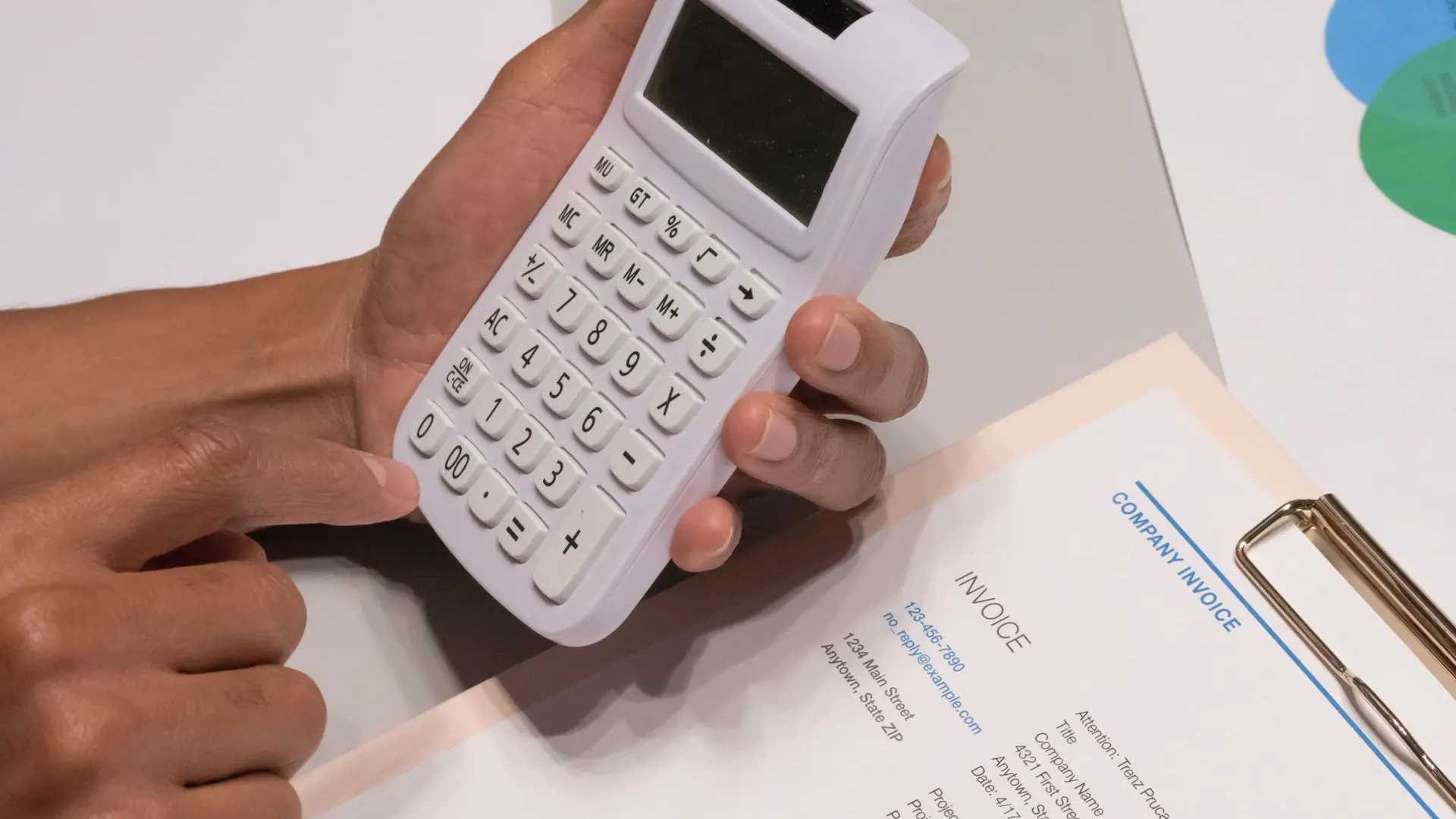
Since 1 January 2025, businesses in Germany must be able to receive electronic invoices, and by 2028 issuing such invoices between businesses will gradually become mandatory. For owners of a company abroad, this raises a practical question: will the Estonian OÜ, the Bulgarian EOOD or the US LLC have to issue its invoices to German customers as XRechnung or ZUGFeRD files in future? The short answer is: as a rule, no. Mandatory e-invoicing depends on where both parties are established – and that is exactly where a foreign company can unexpectedly be caught after all.
What an E-Invoice Is – and What It Is Not
In legal terms, an electronic invoice is an invoice that is issued, transmitted and received in a structured electronic format and that enables electronic processing (§ 14 Abs. 1 Satz 3 UStG, the German VAT Act). The format must comply with the European standard EN 16931; alternatively, an agreed format is permitted, provided the data can be transferred correctly and completely into such a format (§ 14 Abs. 1 Satz 6 UStG). In the view of the tax authorities (Federal Ministry of Finance (BMF) letter of 15 October 2024, continued on 15 October 2025), this is met in particular by XRechnung and by the ZUGFeRD format from version 2.0.1 onwards, with the exception of the MINIMUM and BASIC-WL profiles.
Anything else is an “other invoice” (§ 14 Abs. 1 Satz 4 UStG). This expressly includes the classic PDF invoice sent by email. In the view of the tax authorities, a file with technical format errors is also treated as an other invoice.
When Mandatory E-Invoicing Applies: Both Parties Established in Germany
When does the obligation apply? An e-invoice only has to be issued if both parties are established in Germany, i.e. both the supplier and the recipient of the supply (§ 14 Abs. 2 Satz 2 Nr. 1 UStG). Under § 14 Abs. 2 Satz 3 UStG and section 14.1 Abs. 4 of the VAT Application Decree (UStAE), a business is established in Germany if it has its registered office, its place of management or a permanent establishment there that is involved in the transaction; without a registered office, the place of residence or habitual abode counts.
It follows that if at least one party is not established in Germany, there is no obligation to issue an e-invoice (section 14.1 Abs. 6 UStAE). A Bulgarian EOOD or a US LLC with no registered office, place of management or permanent establishment in Germany may therefore continue to issue an other invoice to its German business customers, on paper or, with the customer’s consent, as a PDF. The same applies to invoices issued by a foreign supplier under the reverse charge procedure in accordance with § 13b UStG: they are not covered by the obligation either.
The Exception Many Overlook: Management in Germany
For owners of foreign companies, this is the point that many overlook. If the company is in fact managed from Germany, its place of management is in Germany and it is therefore established there for the purposes of mandatory e-invoicing. The same applies if a German permanent establishment is involved in the transaction concerned. In that case, the company must issue invoices to German business customers as e-invoices once the transitional periods have ended.
In this situation, however, the e-invoice is the lesser problem. Management in Germany regularly also leads to unlimited corporation tax liability and means that the reverse charge procedure can no longer be applied. More on this in the article “Forming a Company Abroad: Seven Myths Every Founder Should Know”.
All Domestic Businesses Must Be Able to Receive
Unlike issuing, there is no transitional period for receipt. Since 1 January 2025, domestic businesses must have the technical means to receive e-invoices (section 14.1 Abs. 5 UStAE). An email inbox is sufficient for this; a separate inbox just for e-invoices is not required. A business that cannot or will not accept an e-invoice has no right to receive an other invoice instead.
For the foreign company itself, this means: if it is not established in Germany, the obligation to be able to receive does not apply to it. Its German suppliers may continue to send it other invoices.
Transitional Periods Until 2028
For issuing invoices, § 27 Abs. 38 UStG provides for transitional rules that run until 2028:
| Period | What is permitted |
|---|---|
| 2025 and 2026 | Paper invoice or, with the recipient’s consent, another electronic format such as PDF |
| 2027 | The same, but only for businesses with a total turnover of no more than €800,000 in the previous year; EDI procedures with the recipient’s consent for all |
| from 1 January 2028 | E-invoice for all transactions between businesses established in Germany |
Exceptions: Small Amounts, Travel Tickets, Small Businesses
Even after 2028, there are exceptions in which an other invoice remains permitted: invoices for small amounts of up to €250 (§ 33 UStDV, the VAT Implementing Regulation), travel tickets (§ 34 UStDV) and invoices issued by small businesses under the small business scheme (§ 34a UStDV). Certain tax-exempt supplies under § 4 Nr. 8 to 29 UStG are also excluded.
Archiving in the Original Format
As regards archiving, invoices must be kept for eight years, calculated from the end of the calendar year in which they were issued (§ 14b Abs. 1 UStG; § 147 Abs. 3 AO, the German Fiscal Code). For e-invoices, it is the structured part that matters: it must be kept unaltered in the original format. A printout or an image file alone is not sufficient. With hybrid formats such as ZUGFeRD, the structured data take precedence in case of doubt.
Austria and the Wider EU Perspective
In Austria, there is as yet no general obligation to use e-invoices between businesses. There, e-invoices have only been mandatory for invoices to federal government agencies since 2014. A wider look at the EU, however, shows that this perspective is set to change: under Directive (EU) 2025/516 (“VAT in the Digital Age”), member states have been allowed since April 2025 to introduce national e-invoicing obligations without special authorisation. From 1 July 2030, invoices for cross-border transactions between businesses in the EU must in principle be issued electronically, and the invoice data must also be reported to the tax authorities. By then at the latest, e-invoicing will also affect companies in Bulgaria, Estonia or Cyprus that invoice customers in other member states.
Frequently Asked Questions About E-Invoicing
Owners of foreign companies have frequently asked us questions about e-invoicing. Here are the most common ones:
Does my company abroad have to send e-invoices to German customers?
No, as long as it has neither its registered office nor its place of management nor an involved permanent establishment in Germany. In that case it is not established in Germany, and the obligation does not apply.
Is a German VAT number enough to make a company established in Germany?
The law refers to the registered office, place of management or permanent establishment, not to registration. According to the wording of the law, a VAT number alone does not make a business established in Germany. This should be checked in the individual case.
Are PDF invoices still allowed?
Between domestic businesses in 2025 and 2026 with the recipient’s consent, and in 2027 only for businesses with a previous-year turnover of no more than €800,000. For invoices involving a business that is not established in Germany, they remain permitted.
Sources
This article is for general information only and does not replace tax or legal advice. Last reviewed: October 2026.